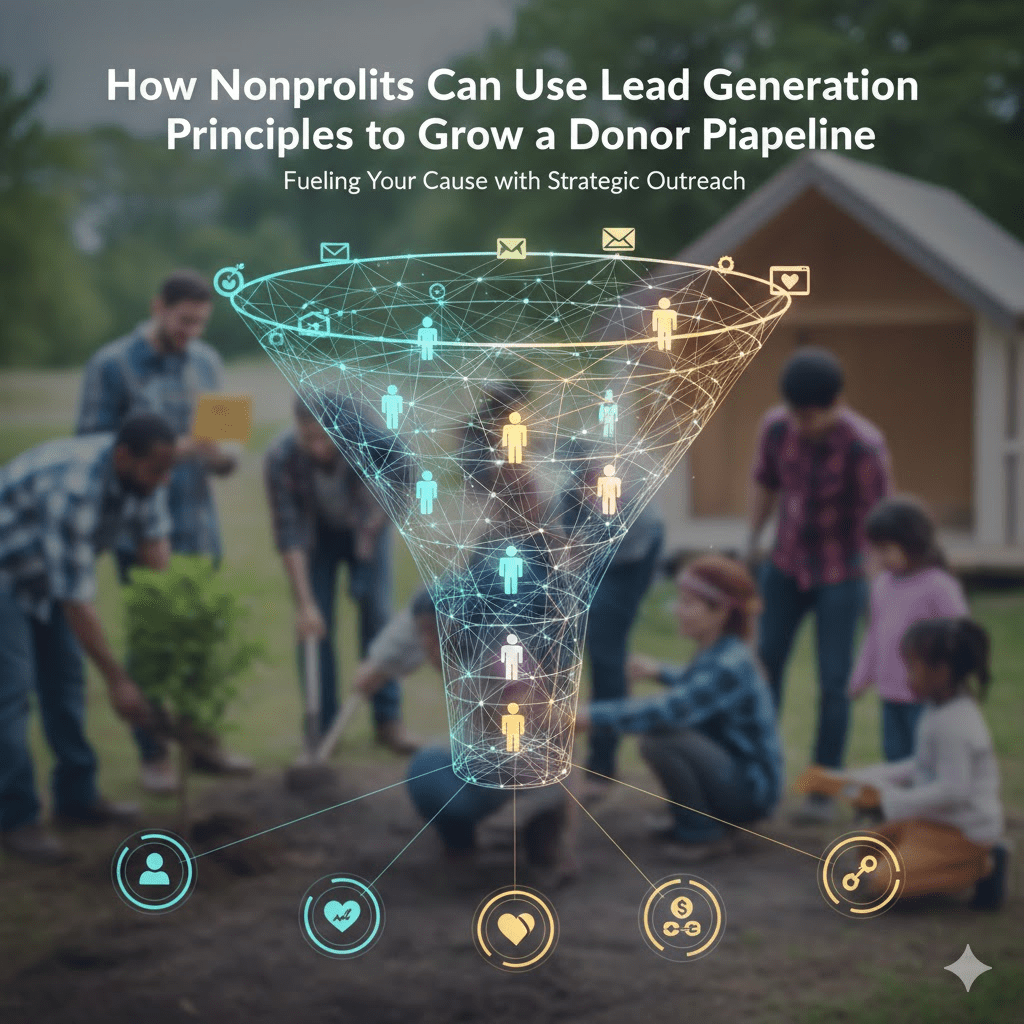
Nonprofits don’t often use the phrase lead generation, and for good reason. It can sound transactional or sales-driven, the opposite of community-building. But at its core, lead generation simply means bringing new people into your mission: people who care, want to learn more, and are likely to become donors, volunteers, or long-term advocates.
In fundraising terms, strong lead generation means a healthier donor pipeline: more first-time contributors, more engaged supporters, and more major-gift prospects entering your orbit throughout the year, not just during campaigns.
If your organization wants to grow sustainably, using lead generation principles through a mission-first lens can make donor development clearer, warmer, and far more effective.
Start With Clarity: Who Are You Trying to Reach, and Why?
Nonprofits often jump straight into events, email pushes, or Giving Tuesday campaigns without pausing to ask: Who exactly are we trying to reach, and what do they care about most?
In for-profit terms, this would be “audience targeting.”
In fundraising terms, it’s simply understanding your supporters.
Define your core supporter groups
Most nonprofits naturally attract a few types of supporters, such as:
- Advocates who care deeply about the cause
- Community-minded professionals looking to make a difference
- Event attendees who believe in your work after showing up once
- Volunteers who already feel emotionally connected
- High-capacity donors who respond to outcomes and long-term vision
Each group engages differently and needs different touchpoints to feel seen.
Refine your core message
Every successful donor journey begins with the same questions:
- Why does this issue matter?
- What change does your organization create?
- How does each contribution make a meaningful difference?
When this is clear, everything becomes easier:
Emails feel more personal. Website content hits deeper. Calls to action become invitations, not requests.
This clarity is the foundation of any strong donor pipeline.
Use Story-Driven Content to Attract Mission-Aligned Supporters
People don’t become donors because of tactics; they become donors because something touches them.
That’s why value-driven, story-led content is one of the most powerful lead generation tools nonprofits can use. It gives potential supporters a way to connect emotionally before they’re asked to give.
Create simple “entry points” into your mission
These don’t need to be complicated. You might offer:
- A short “Impact Starter Kit” explaining the problem and the hope
- A heartfelt behind-the-scenes video showing your work in action
- A pledge or community promise that people can sign
- A “Supporter’s Guide” explaining how small actions compound into big change
- A short virtual event or Q&A with program staff
These are gentle first steps, ways for someone to say, “I want to understand this better.”
Amplify them with paid and organic channels
Nonprofits can grow awareness by leaning on a mix of organic and paid amplification:
- Google Ad Grants
- Boosting high-engagement social posts
- Partnerships with community ambassadors or micro-influencers
- Cross-promotions within newsletters of aligned organizations
- Outbound awareness campaigns that reach people who never see your social channels
This isn’t about sales, it’s about making sure the right people discover your mission sooner.
And when a nonprofit wants help structuring these outreach efforts without overwhelming staff, collaborating with a lead generation agency that understands mission-first communication can provide extra support without adding internal complexity.
Your Email List Is Still the Strongest Driver of Donations
Despite new platforms and algorithms, email consistently generates the highest return for nonprofits, because it creates a space for ongoing relationship-building.

Build a warm welcome experience
When someone joins your list, consider a short 2–3 email welcome sequence:
- A simple introduction to the issue
- A story showing impact
- A clear invitation to stay connected or participate in a small way
This alone can significantly increase conversion to first gift.
Send updates that deepen trust
Monthly newsletters that include program stories, impact snapshots, or quick notes from staff build trust over time. When donors feel emotionally connected, their likelihood to give and keep giving rises dramatically.
Segment your list
Treat:
- petition signers
- event attendees
- first-time donors
- volunteers
…as unique groups with different motivations.
Segmentation creates more personal experiences, which every study shows leads to higher engagement and higher donor value.
Use High-Touch Channels to Identify Major Gift Prospects
While digital channels build awareness, high-value supporters often reveal themselves through human connection.
Social platforms signal interest
LinkedIn, in particular, can help nonprofits reach:
- potential corporate partners
- CSR leaders
- professional networks aligned with your mission
- individuals with capacity who may never visit your website
Engagement here can be an early indicator of major-gift potential.
Warm calls strengthen retention and upgrades
A simple outreach call can:
- lift event attendance
- improve donor retention
- upgrade first-time donors into mid-level contributors
- surface individuals who are ready for deeper conversations
For teams already stretched thin, an outsourced SDR partner can help with these warm calls or light qualification conversations, not to sell, but to deepen relationships and route high-interest supporters to fundraising staff.
Measure What Actually Strengthens Your Donor Pipeline
Nonprofits often report dollars raised, but pipeline health requires broader visibility.
Smart lead generation for nonprofits means tracking:
1. New mission-aligned contacts
Who’s joining your community through events, petitions, referrals, or content?
2. Engagement signals
Who watches videos, replies to emails, opens multiple newsletters, or signs up to volunteer?
These behaviors often predict giving better than demographics.
3. Conversion to first gift
This shows whether your welcome and nurturing efforts resonate emotionally.
4. Upgrade milestones
Watch transitions such as:
- subscriber → first-time donor
- first-time donor → recurring donor
- recurring donor → mid-level supporter
- highly engaged advocate → major gift prospect
When you track these moments, you can support the right people at the right time.
Final Take: Lead Generation Is Just Structured Community-Building
When nonprofits apply lead-generation principles through a mission-first lens, it doesn’t feel like marketing at all. It feels like what fundraising has always been: relationship-building grounded in trust, empathy, and shared purpose.
These approaches help nonprofits:
- attract the right supporters
- convert interest into meaningful participation
- uncover major-gift prospects earlier
- strengthen year-round fundraising results
Lead generation isn’t about transactions. It’s simply a clearer way to welcome the people who already care about your mission, and help them turn that caring into lasting impact.