Stage 01 · Research
We start by listening.
We learn who you serve, including supporters who rely on assistive technology, and set accessibility targets up front.
Building for everyone is a core part of our mission. An accessible nonprofit website widens your reach, protects your organization, and almost always improves the experience for every supporter, not just those using assistive technology.
Our commitment
Elevation designs and builds accessible nonprofit websites to WCAG 2.2 AA as a baseline, and treats accessibility as a starting point for every project, from research and design through development and ongoing maintenance, so the people you serve can all access your mission.
Access is not a feature. It is the whole point of being online.
A nonprofit’s website is often the front door to its programs, its services, and its case for support. If that door is hard to open, the mission stops at the threshold. We build so it never does.
We don’t chase a checkbox. WCAG is the floor; the goal is a site that genuinely works for people with vision, hearing, motor, and cognitive differences.
Contrast, focus order, semantics, and keyboard paths are decisions we make in the wireframe — not patches applied the week before launch.
Inclusive design and ambitious design are the same discipline. We refuse the false trade-off between meeting standards and looking exceptional.
Automated tools catch a fraction of issues. We pair them with manual review and keyboard runs that reflect how people actually browse.
From the first research call to the maintenance plan that keeps your site healthy, accessibility is part of the work — not a line item.
Every site we design and build targets WCAG 2.2 AA as standard, and we can scope to stricter conformance where your audiences or obligations call for it.
Color contrast, focus states, semantic structure, and keyboard access are designed in early, the cheapest and most reliable place to get them right.
We combine automated scanning with manual review and keyboard-only navigation across the platforms people actually use.
Heading order, alt text, link clarity, and plain language are built into how we write. We also train your team to keep new content accessible.
Donation flows, sign-ups, and contact forms get labeled fields, clear errors, and full keyboard operability so giving is never blocked.
Sites drift as content changes. Our partnership and maintenance plans keep accessibility monitored and maintained well past launch.
Scroll: each stage stacks on the last ↓
We learn who you serve, including supporters who rely on assistive technology, and set accessibility targets up front.
Contrast, type scale, focus order, and touch targets are checked in the design files before a line of code is written.
Semantic HTML, ARIA where needed, and full keyboard support are engineered in, with reduced-motion preferences respected.
Automated scans plus manual review and keyboard passes against the WCAG success criteria, with issues logged and fixed.
Periodic re-checks and editor guidance keep the site conformant as content and features evolve.
We build beyond what the ADA requires, to the WCAG 2.2 AA standard, and follow the W3C’s body of knowledge in how we work.
The Web Content Accessibility Guidelines, version 2.2 at Level AA, to stay ahead of the evolution of the ADA.
The latest guidelines add criteria for focus appearance, dragging, and target size, all part of the 2.2 AA standard every project ships with.
Section 504 applies to organizations receiving federal funding, and it references the same WCAG success criteria our work already builds to.
Courts increasingly read the Americans with Disabilities Act to cover websites. Conforming to WCAG is the practical way to reduce that exposure.
For nonprofits with audiences abroad: the European accessibility standard builds on WCAG, the same guidelines our WCAG 2.2 AA work follows.
Our team is CPACC certified through the IAAP and works from the official W3C body of knowledge, keeping skills current as standards evolve.
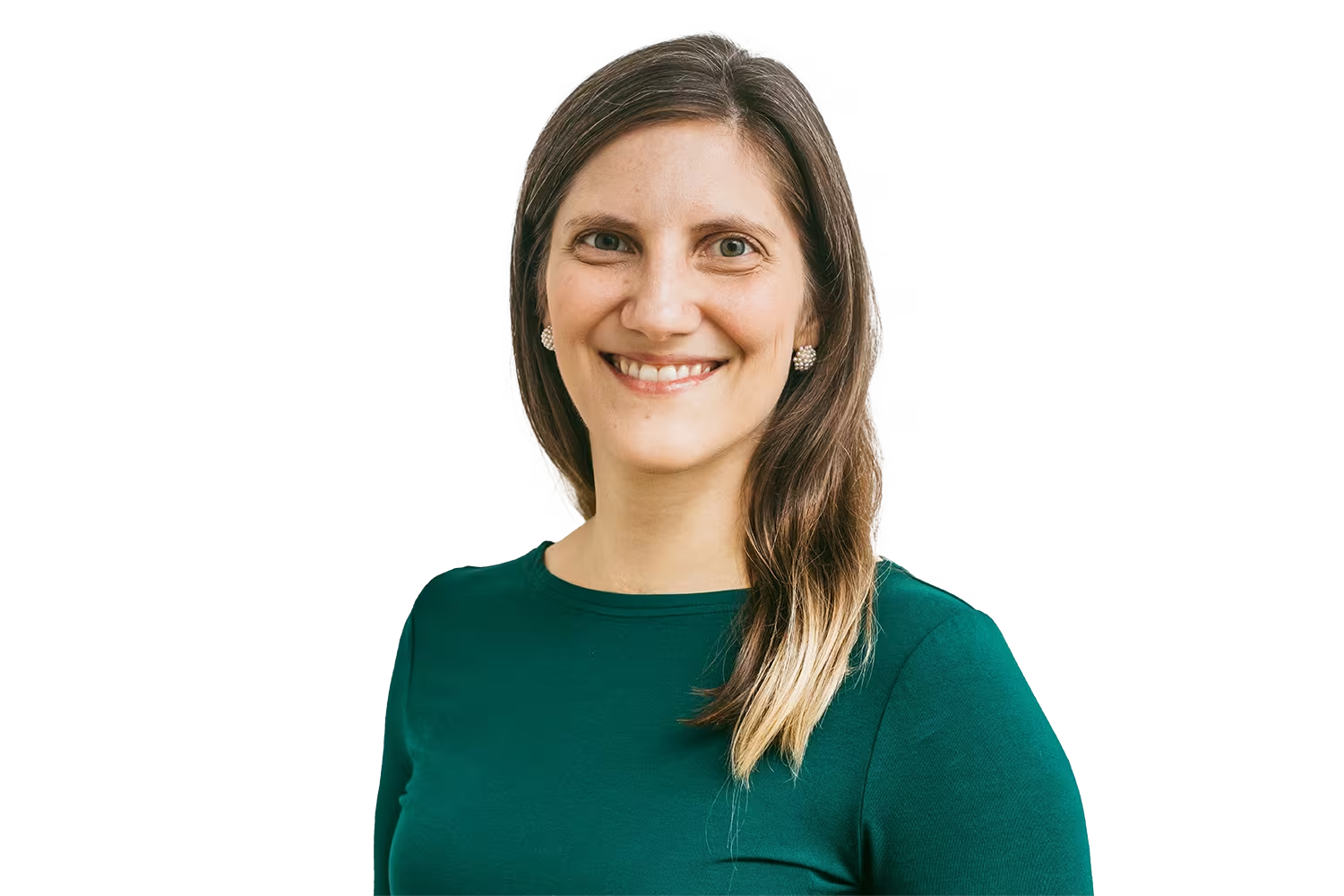
Chief Operating Officer & Accessibility Lead
“Accessibility isn’t just about compliance. It’s about visibility, inclusivity, and doing the right thing.”
As COO, Erin makes sure accessibility is built into how every Elevation engagement actually runs — from the user personas we create in Discovery to the manual accessibility passes before launch. She keeps our process aligned with the W3C’s Web Accessibility Initiative (WAI) and current WCAG guidance. She works directly with nonprofit teams to make accessibility practical: training content editors, untangling donation and sign-up flows, and turning audit findings into fixes that hold up as a site grows.
No single tool finds everything, so we layer automated scanners with the assistive technologies real visitors use.
Practical accessibility resources for nonprofit teams, whether you work with us or not.
Found a barrier?
If you encounter an accessibility issue on a site we built or on this site, email accessibility@elevationweb.org and we’ll work to resolve it promptly. You can also read our accessibility statement.
Accessibility is included in everything we build. Book a call and we’ll start with where you are today.
Tell us about your organization and we’ll be in touch within one business day with the fastest path from your current site to measurable growth.